You invested in a dental crown to protect a damaged tooth. Maybe it was expensive. Maybe you were told it would last fifteen years or more. And now, just a few years later, it’s cracked, chipped, or loose.
If this sounds familiar, you’re not alone. You might even be wondering if your dentist did something wrong. In many cases, crowns that keep breaking have nothing to do with the crown itself. It has everything to do with how you bite and grind your teeth while you sleep.
The Force You Don’t Feel
Teeth grinding, also called bruxism, is one of dentistry’s most overlooked problems. Many people don’t even realize they do it. It happens at night, while you’re asleep. You wake up with a dull headache or a sore jaw, but you don’t connect it to your teeth.
Grinding generates forces far beyond what normal chewing produces. When you chew food, your teeth meet with controlled pressure. When you grind, your jaw muscles clamp down with tremendous force and slide your teeth against each other. That repeated stress adds up over time.
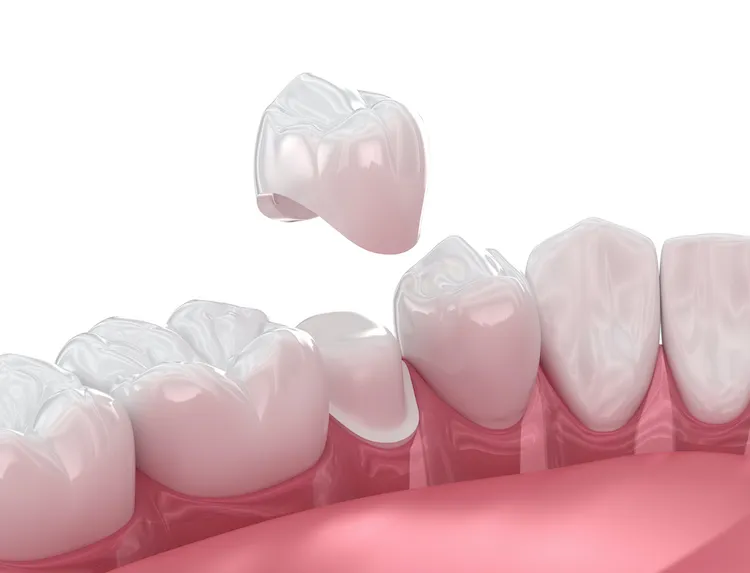
A natural tooth can often handle this wear. A crown, especially one at the margin where it meets the tooth, is more vulnerable. The porcelain or ceramic can chip. The seal at the edge can break down. Eventually, the crown fails.
Why the Margin Matters Most
The margin is the seam where your crown meets your natural tooth. It’s the most critical part of the restoration. If bacteria slip under that edge, decay starts beneath the crown where you can’t see it or brush it.
Grinding puts concentrated pressure right at that seam. Over months and years, tiny fractures can develop. Once that seal is compromised, the tooth underneath is at risk. In some cases, the crown pops off. In worse cases, the tooth fractures below the gumline and can’t be saved.
This is why a crown that “should have lasted” sometimes doesn’t. The problem isn’t the crown. It’s the bite forces attacking it every night.
Signs You Might Be Grinding
Not everyone knows they grind. Watch for these clues:
- Your jaw feels tight or sore in the morning
- You wake up with headaches that fade during the day
- Your teeth look worn down or flattened
- You’ve had multiple crowns or fillings fail
- Your bed partner hears clicking or scraping sounds at night
If any of these sound familiar, bring them up at your next visit. It changes how we plan your treatment.
How a Prosthodontist Approaches the Problem
This is where specialized training matters. As a prosthodontist, Dr. Boustany looks at your entire bite, not just the single failed tooth. He evaluates how your upper and lower teeth meet, where the heavy contacts are, and whether your jaw is working in harmony.
When we place a new crown, we can choose materials designed to withstand heavy forces. Zirconia, for example, resists fracture much better than older porcelain. We also adjust the crown’s shape, so your bite lands evenly instead of concentrating stress in one spot.
Just as important, we can fit you with a custom nightguard. You wear this protective appliance while you sleep. It absorbs the force of grinding so your teeth and crowns don’t have to. A properly made guard is thin, comfortable, and designed around your specific bite.
Stop the Cycle
If you’ve lost a crown, don’t just replace it and hope for the best. Find out why it failed. Treating the cause protects every restoration you’ll ever need, from that first crown to a full set of implants.
To schedule an evaluation, call Revive Dental and Implant Center at 304-396-6658. You can also request an appointment online.